
When you make a credit decision, the question is rarely whether more data is helpful. The real question is whether the additional cost of that data will materially improve that decision.
Tri-merge credit reports promise the most complete view available by pulling information from all three major credit bureaus. But that comes at an increased cost. Is it worth it? We’ll explain.
What Is a Tri-Merge Credit Report?
A tri-merge credit report combines data from Equifax, Experian, and TransUnion into a single report. Instead of choosing one bureau or reviewing separate reports side-by-side, you get a unified view that highlights the differences or gaps that might show up in individual reports.
Tri-merge credit reports are commonly used when you’re making significant decisions where credit risk or compliance is high. The most well-known is in mortgage underwriting, but tri-merge reports are also valuable when evaluating business credit, tenant screening, or setting high credit limits.
Don’t All Three Credit Bureaus Show the Same Information?
While you might think that Equifax, Experian, and TransUnion would all report the same data, that’s rarely the case. It’s not a fault of the bureaus, though. Not all lenders and creditors report to all three nationwide credit bureaus. Some report to only two, one, or none at all. As a result, a tradeline that appears on one bureau may be completely absent from another. Payment histories, collection accounts, and even public records can vary depending on where the data was reported and how frequently it was updated.
Relying on a single bureau can therefore introduce blind spots, especially when a missing tradeline or delinquency would materially affect risk assessment.
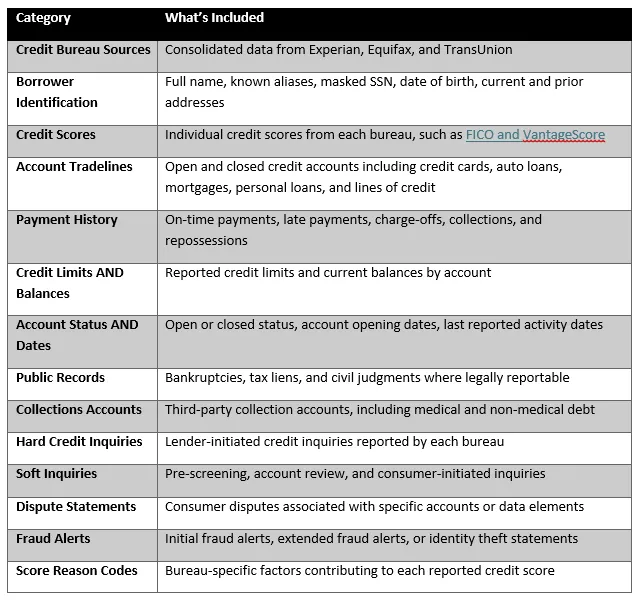
What’s Included in a Consolidated Credit Report?
A consolidated credit report, tri-merge credit report, or 3-in-1 credit report are different names you may hear but typically include a summary of information from the three credit bureaus.
Where Tri-Merge Credit Reports Deliver the Most Value
Tri-merge credit reports are most helpful when there’s bigger risk and when missing an important data point could impact your credit decision.
For example, when there’s significant exposure or high dollar amounts are at stake, finding that there are delinquent accounts or liabilities that don’t show up on a single credit bureau report might change how you evaluate risk.
Tri-merge reports are also important for regulated environments or industries with heightened compliance requirements, where you have to demonstrate a thorough level of due diligence to explain decisions.
When a Tri-Merge Credit Report May Be Overkill
Not every decision requires the most comprehensive data set available. For lower-risk transactions or routine screenings, the added cost of a consolidated credit report may not justify the expense.
Ongoing monitoring is another area where tri-merge reports are often unnecessary. When the objective is to track changes over time rather than make a one-time approval decision, consolidated or single-bureau reports can typically provide sufficient signal without introducing unnecessary expense.
Many organizations find value in a tiered approach. Tri-merge data might be reserved for exceptions, escalations, or high-risk cases where you need more in-depth information.
If you are unsure whether a tri-merge credit report or consolidated credit report is the right fit for your decision process, schedule a free consultation with Command Credit to evaluate your options.