

Collectively, the three major credit bureaus have data on more than 200 million consumers. This data can be highly valuable whether you are evaluating rental applications, extending credit to individuals, or conducting employment background screening.
However, there are federal, state, and local laws that dictate how these can be used. The Fair Credit Reporting Act (FCRA) governs how you can ask for and use the information. The Fair Housing Act (FHA) has additional requirements when it applies to a rental credit check and tenant screening services. The Equal Employment Opportunity Commission (EEOC) and the Federal Trade Commission (FTC) also have guidance on employment background screening. In addition, there are state and local laws that may be even more restrictive, so you will want to consult with your attorney before starting any of these processes.
This guide explains how consumer credit reports are created, how businesses use them for verification, and how you can use credit data responsibly while complying with federal regulations.
What Is a Consumer Credit Report?
A consumer credit report is a record of an individual’s credit history and financial behavior. Equifax, Experian, and TransUnion are the three major credit bureau that collect financial history for consumers. Here’s what you’ll typically see.
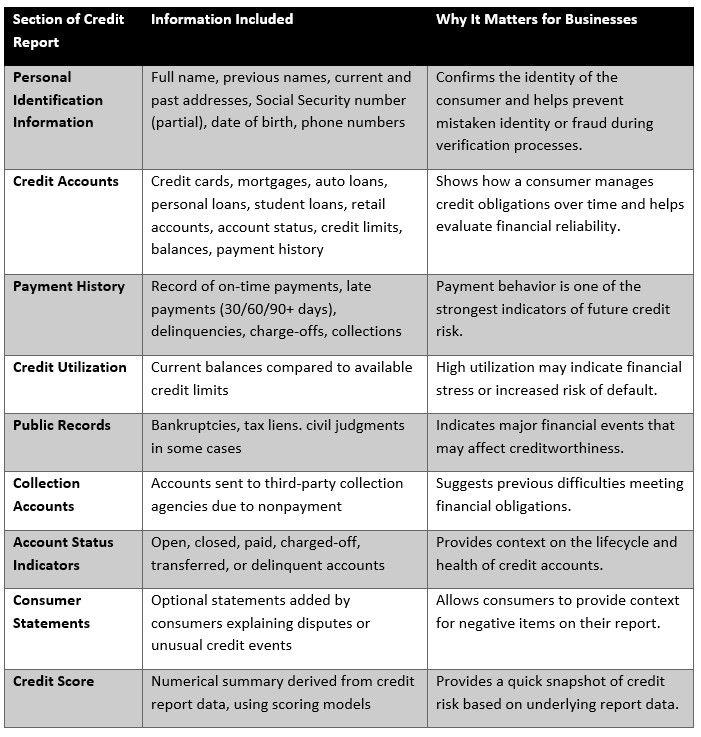
Why Businesses Use Consumer Credit Reports
Businesses rely on consumer credit reports for several important reasons. The most common purpose is to evaluate risk. When a business enters into a financial or contractual relationship with an individual, it wants to understand whether it will get paid on time. While there are no guarantees, you can get an idea of how someone has handled credit in the past. Individuals who consistently pay their financial obligations on time may present a lower financial risk than those who frequently miss payments or carry significant unpaid debt.
Consumer credit reports also support fraud prevention. When the information in a credit file doesn’t match the details provided in a credit application, it gives you a reason to take a closer look.
Tenant Screening Services and Rental Credit Checks
One of the most common uses of consumer credit reports is for landlord tenant screening when evaluating prospective renters. In fact, 88% of landlords say they run a tenant screening report before making a rental decision.
Tenant screening services provide you with the information you need to make better decisions about renting.
Landlord Tenant Screening and Credit Risk Evaluation
Tenant credit screening can include consumer credit reports, although landlords often want additional information, such as:
- Employment verification
- Income verification
- Rental and housing history
- References from past landlords
By reviewing multiple data points from credit check services for landlords, you can make more balanced decisions about prospective tenants.
Employment Background Screening and Credit Reports
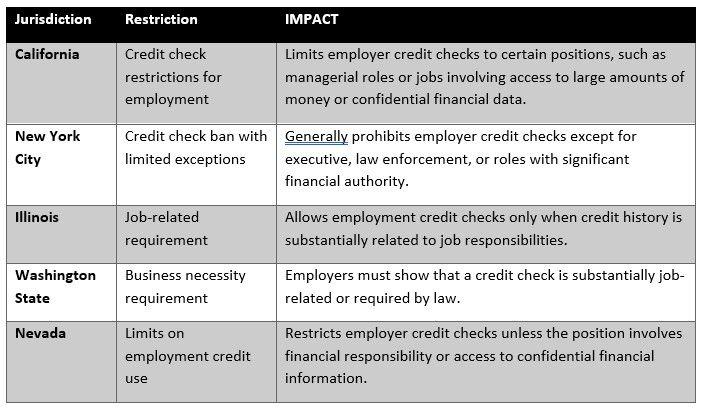
Employers may also use consumer credit reports during employment background screening in many cases, but this type of screening is typically limited to positions that involve financial responsibilities or access to sensitive financial information.
For example, employers may review credit reports when hiring for positions in accounting, finance, payroll management, or executive leadership roles. However, you’ll need to check with state and local laws to make sure you’re in compliance. Some states prohibit the use of credit reports in employment background screening except for very specific roles or for those andling a large amount of cash regularly. There are also several laws regarding the use of any criminal history.
FCRA Compliance Requirements for Businesses and Landlords
Businesses and landlords requesting consumer credit reports must comply with federal regulations that govern how consumer data is accessed and used. The FCRA establishes several requirements designed to protect consumer privacy and ensure fair use of credit information, such as:
- Permissible purpose: A business or landlord must have a legitimate reason to request a consumer credit report. Rental applications, employment screening, and lending decisions typically qualify as permissible purposes.
- Authorization and disclosure: you must get permission before you pull a consumer credit report or use credit check services for landlords.
- Adverse action notices: If you use credit reports or rental credit checks to make decisions that result in denial, changing terms, or adjusting payments, you must notify the applicant and provide them with specific information. In some jurisdictions, this includes giving them a copy of the credit report.
State and Local Laws That Affect Tenant and Employment Credit Checks
Because laws vary significantly between states and cities, businesses and landlords should review the regulations that apply in their jurisdiction. Here are a few ways these laws can impact your use of employment background screening.
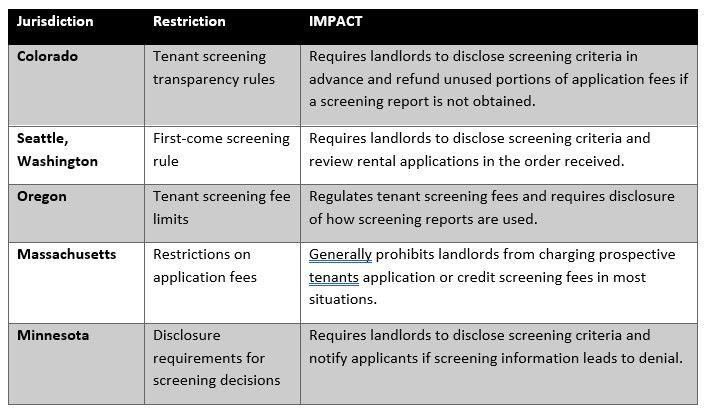
Similar restrictions impact landlord tenant screening practices in some locations.
Accuracy and Disputes in Consumer Credit Reports
Although credit reports contain extensive financial information, they are not always perfect.
Consumers file hundreds of thousands of credit reporting complaints annually with regulators, making credit reporting one of the most common financial consumer complaints. So, if you find something concerning, you should discuss it with the applicant first and give them an opportunity to explain the situation. If you make a negative decision based on what you’ve learned, an adverse action notice must be provided. Typically, this includes:
- The name, address, and phone number of the reporting agency
- A statement that the reporting agency did not make the decision
- Notice of the individual’s right to obtain a free copy of the report
- Notice of the right to dispute inaccurate information
These requirements ensure that consumers have the opportunity to review and correct inaccurate information that may appear in their credit reports.
Choosing Reliable Credit Check Services for Businesses
When you are considering credit check services as a landlord or need consumer credit reports for business, there are options. You can get consumer credit reports from Equifax, Experian, or TransUnion, or all three in what’s called a tri-merge report.
However, you may have to sign up for a subscription plan, which may not work if you do occasional landlord tenant screening or don’t process a high volume of credit applications. Command Credit lets you pull credit reports on demand without a subscription, and you can choose from one or more credit reports without having to visit multiple credit bureaus.
Best Practices for Using Consumer Credit Reports Responsibly
Consistency and fairness are key in using consumer credit reports fairly and responsibly. Transparency is important, too. Applicants should know you’re pulling a report and understand how their information will be used. If there are decisions made based on what you learn, they also need to know what decision you make and why.
You should always evaluate credit information in context. Financial situations change. Temporary economic challenges may appear in credit reports even for otherwise responsible individuals. Late payments from 20 years ago may have no bearing on someone’s ability to pay their bills or rent if they’ve paid on time ever since.
Regulators and courts also look at medical debt differently from in the past. California, New York, Minnesota, Rhode Island, and several other states have passed laws effectively banning medical debt from credit reports for their residents, although that’s still being challenged in court. The major credit bureaus remove paid medical debt from reports and only include such debts if they are at least a year old.
FAQs—Frequently Asked Questions About FCRA, Landlord Tenant Screening, Employment Background Screening, and Credit Decisions
What rights do consumers have under FCRA? Under FCRA, consumers have the right to know when a credit report is used in a decision, request a copy of the report, and dispute inaccurate or incomplete information.
Can landlords charge for tenant screening services? Yes, landlords may charge applicants a fee to cover the cost of a credit check, though some states and cities limit the amount that can be charged.
Why do employers check credit? Employers may review credit reports for positions involving financial responsibilities or access to sensitive financial information to evaluate potential risk.
What is an adverse action notice? An adverse action notice is a required notification informing a consumer that a decision, such as denying a rental application or job offer, was influenced by information in a credit report.
If someone applies for credit, do I need permission to run a consumer credit report? Yes, you need written consent and have a permissible purpose under the FCRA. Soft inquiries, such as those reviewing an existing account, do not need permission. For employment or renting, written consent is always required.
Using Consumer Credit Reports to Make Smart Business Decisions
Consumer credit reports have become an essential tool for businesses and landlords seeking to verify financial information and reduce risk.
Command Credit provides businesses with access to consumer credit reports and screening solutions that support compliant tenant credit screening and employment background screening. Contact Command Credit today to get started. Pull consumer credit reports instantly.